
How to Make Disciples
Making disciples is simpler than it is often made to sound. Here is the pattern Jesus gave, and how to begin it this week.
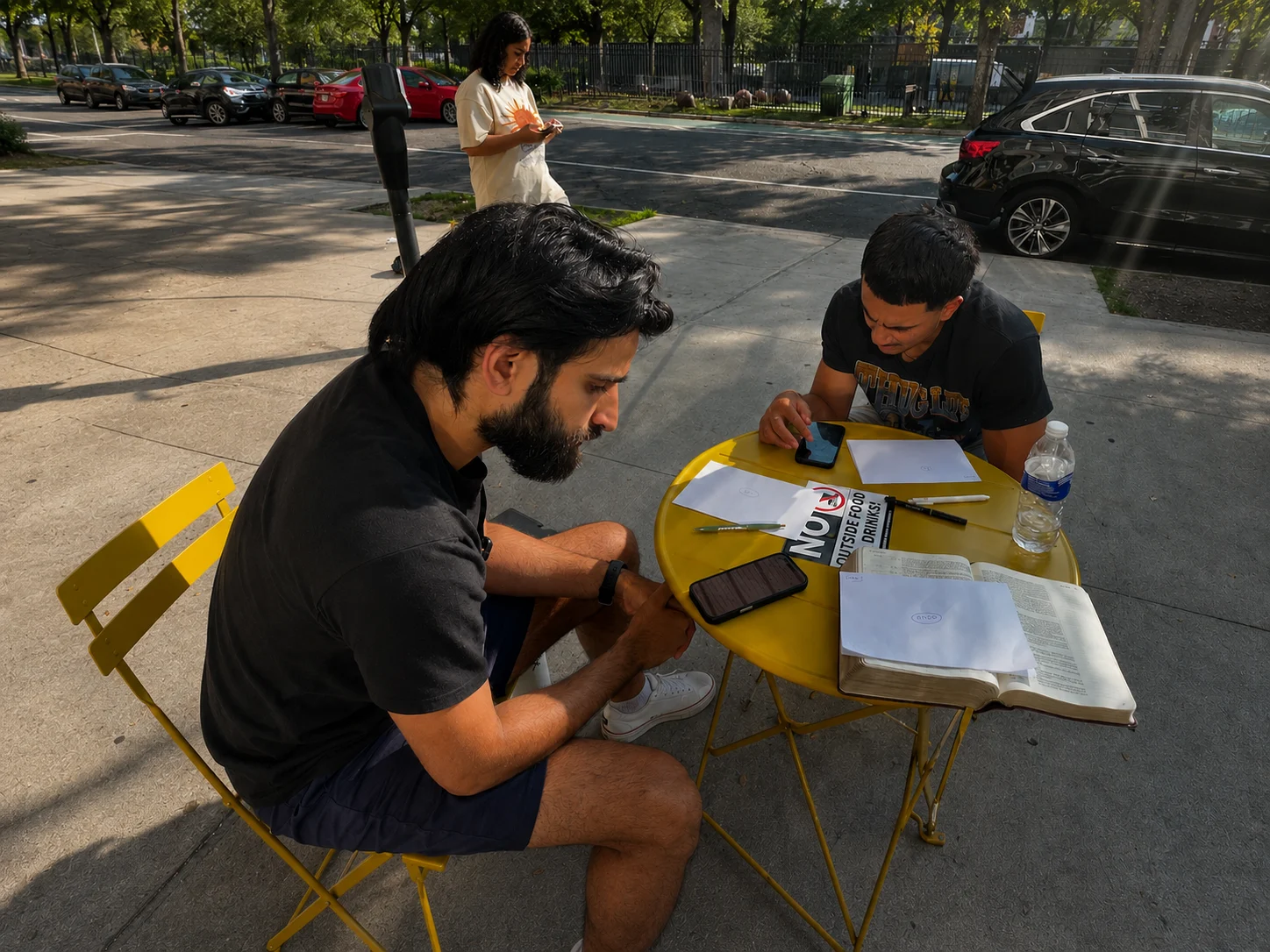
We make disciples by helping people begin following Jesus, learn to obey his teaching with other believers through shared life, and depend on God together in prayer. From the beginning, we train them to help someone else do the same. It is a shared life, not a class you complete.
What It Means to Make Disciples
To make disciples is to help a person follow Jesus, be changed by Jesus, and join Jesus in his mission. It is not the transfer of information or the completion of a curriculum. A disciple is someone learning to obey what Jesus said and to help the next person do the same.
Jesus stated the assignment plainly before he left:
Matthew 28:18-20Then Jesus came to them and said, “All authority in heaven and on earth has been given to me. Therefore go and make disciples of all nations, baptizing them in the name of the Father and of the Son and of the Holy Spirit, and teaching them to obey everything I have commanded you. And surely I am with you always, to the very end of the age.”
The central command is to make disciples. Jesus tells us to do that by going, baptizing, and teaching people to obey everything he commanded. Coming to faith is not a separate thing from discipleship. When someone repents and believes, they have started the life Jesus is describing, and our job is to help them keep walking in it.
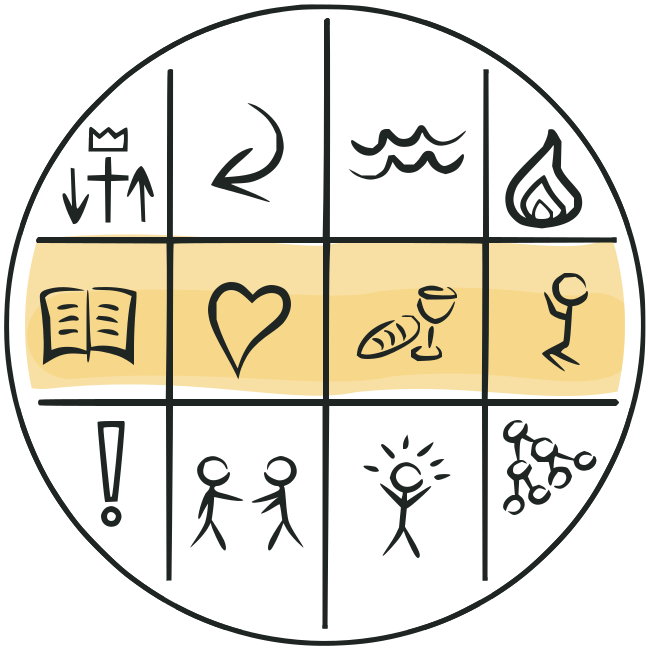
How does that walking keep happening? The first church shows us. After Peter preached at Pentecost, thousands believed, and Acts 2:36-47 records the practices that formed them into a church. The Church Waffle gathers those twelve practices into one picture, and its heart is a single verse:
Acts 2:42They devoted themselves to the apostles’ teaching and to fellowship, to the breaking of bread and to prayer.
Those four rhythms of Acts 2:42, teaching, fellowship, breaking bread, and prayer, are the middle row of the waffle. The eight practices around them, from repentance and baptism to generosity, worship, and going to make disciples, come from the rest of Acts 2:36-47. Everything below follows that shape: get people started with Jesus, then help them obey his teaching, share life, and pray together while learning to reach others.
Start by Following Jesus Yourself
You cannot give away what you do not have. Before you disciple anyone, ask whether you are living the thing you will ask them to live.
That does not mean waiting until you are an expert. Every believer can begin making disciples now, and most of us learn while we go. But you cannot train someone in an obedience you refuse to practice yourself, so the starting point is a real, if imperfect, rhythm of hearing God in Scripture and doing what he says. The three core habits of a disciple are a good self-check: are you abiding in Christ, praying for people who do not yet know him, and able to share the gospel simply?
John 8:31To the Jews who had believed him, Jesus said, “If you hold to my teaching, you are really my disciples.”
Character, sound doctrine, and maturity all matter, and they deepen over a lifetime. Training and coaching make you more competent at helping others. None of that is a prerequisite for starting; it is what you keep growing in as you go.
Pray and Look for Open People
Making disciples starts on your knees, not with a strategy. Jesus told his followers to pray for the harvest before they walked into it:
Luke 10:2He told them, “The harvest is plentiful, but the workers are few. Ask the Lord of the harvest, therefore, to send out workers into his harvest field.”
Then look at the people already around you: family, friends, coworkers, and neighbors you see every week. Ask God to show you who is open.
Jesus also sent them to look for a “person of peace,” someone who welcomes you and your message and often opens a door to others (Luke 10:5-7). Such a person is rarely an isolated project; they tend to bring a household or network with them, so one open person can become a doorway to many. Care for everyone God puts in front of you, and invest your steady time where he is giving openness and obedience. Looking for the responsive is not writing anyone off. It is going first through the doors God is already opening.
Share the Gospel and Invite a Response
Disciple-making includes clearly sharing the gospel and inviting a response. Do not assume that attending a Bible study will make the gospel clear by itself. At some point you actually tell someone the good news about Jesus and ask them to respond. A spiritual conversation might move into your own story, a simple gospel presentation, or reading Scripture together. What matters is that the gospel gets spoken clearly and a response gets invited.
Your testimony is one of the simplest ways to begin, so learn to share your testimony clearly and briefly. When you need to lay out the gospel itself, a tool like the 3 Circles gospel presentation helps you do it on a napkin.
Say plainly what a response involves: turning from sin and self-rule to God (repentance), trusting that Jesus died and rose for you (belief), and confessing him as Lord, which means handing him the authority to run your life (Romans 10:9). Then call for a decision, the way Peter did when the Pentecost crowd asked what to do: “Repent and be baptized, every one of you, in the name of Jesus Christ” (Acts 2:38).
Baptize New Believers and Bring Them Into Community
Baptism is in the Great Commission for a reason, and it belongs near the beginning of the journey. In Acts, people were baptized the same day they believed. It is an early act of obedience and a public marker of a new allegiance, not a graduation ceremony reserved for mature Christians who have proven themselves.
Jesus never told us to make isolated disciples. A new believer needs other believers to obey Jesus alongside, people who will pray with them, correct them gently, and cheer them on. So from the start, connect the person you disciple to a community, whether an existing church or a small group that reads Scripture and obeys it together. As people believe and are baptized, help them begin practicing the basic rhythms of simple church together. The point here is non-negotiable: no one is meant to follow Jesus alone.
This is worth holding as a conviction, because it is easy to aim at only half of it. Disciple-making without church can leave people connected to a coach but disconnected from a people. Church without disciple-making can leave people gathered but unchanged. We get what we aim at, so aim at both: make disciples, and gather them into a church that keeps making disciples. Do not disciple someone and assume a church will form on its own, and do not gather people and assume disciples will be formed just by meeting. Neither happens by accident.

TAKE THE NEXT STEP
You can learn the whole pattern and still make no disciples, because a disciple is made with a person, not a page.
A lab is where knowing how disciples are made turns into being able to do it, practiced with other people before you try it with the person already in front of you.
Loading the next lab…
Devote Yourselves to the Apostles’ Teaching
The first mark of Acts 2:42 is devotion to the apostles’ teaching. That means learning to hear what Jesus says and actually do it, rather than collecting Bible facts to know more.
When you gather, read a short passage of Scripture together and ask what it shows about God and about people. Then get specific about obedience: what is Jesus asking you to do about this, and how will you do it this week? People grow as disciples when they leave having decided to obey something concrete, and come back having tried it.
Practice Obedience Through With-ness
The next marks in Acts 2:42, fellowship and breaking bread, point to something the early believers did constantly: they were with each other. “With-ness” is simply shared life. Disciples are not formed only in scheduled meetings. Formation also happens over meals, during ordinary problems, while serving people, and while trying to obey Jesus together.
This is how Jesus worked. He called the Twelve to be with him, and then he sent them out to practice (Mark 3:14). Following and fishing came together from the first day: “Come, follow me,” he said, “and I will send you out to fish for people” (Mark 1:17).
You can carry that same movement, whether you meet one to one, as a household, or in a small group:
- Model it while they watch.
- Assist them as they try it.
- Watch them do it on their own, and give honest feedback.
- Leave the work in their hands as they begin teaching others.
Some of this happens in a scheduled conversation, but much of it happens in the kitchen, in the car, and in the middle of a normal week. Gentle, honest follow-up keeps it from drifting, so friendly accountability built into your shared life turns good intentions into changed behavior. If most of your week is spent on the job, CoVo Multipliers has a practical field guide on how to make disciples at work that carries these same rhythms into a normal workweek.
Depend on God Together in Prayer
Prayer is the last mark of Acts 2:42, and it is far more than the way a meeting opens and closes. Disciples are learning to depend on God, and that dependence has to be practiced together.
So pray for the people on your list by name. Ask the Holy Spirit for power and words. Listen for what God is saying, and act on it. Intercede for one another, and ask boldly for courage and open doors, as the church in Acts did before going back out to speak (Acts 4:29-31).
No method changes a heart. God does. These rhythms teach us to listen to him, obey him, and depend on him together.
Bring the Rhythms Together With Three Thirds
One reliable way to bring these rhythms together is the Three Thirds process: look back, look up, and look forward.
Look back: Care for one another, celebrate what God is doing, and lovingly follow up on last week’s obedience and sharing goals.
Look up: Read Scripture together, ask what it reveals about God and people, name what Jesus wants you to obey, and practice what you are learning.
Look forward: Set specific goals for obedience and sharing, then pray for one another and for the people you hope to reach.
Three Thirds is not a curriculum or a rigid meeting format. It is a simple, reproducible rhythm that helps believers practice the apostles’ teaching, shared life, prayer, and mission together. Keep it simple enough that everyone can take part and someone else can lead it next time.
Help Them Make Disciples
From the first week, you are aiming for the person you disciple to disciple someone else. Paul said it plainly when he trained Timothy:
2 Timothy 2:2And the things you have heard me say in the presence of many witnesses entrust to reliable people who will also be qualified to teach others.
Count the generations in one verse: Paul, to Timothy, to reliable people, to others. Multiplication starts that small and that early. When your disciple obeys something, ask, “Who are you going to tell?” Have them share their testimony, walk a friend through the gospel, and invite someone into Scripture and community. When they are ready, help them start discipling a new person while you coach from the side. For a simple, reproducible plan you can walk them through, see one-on-one discipleship.
Addition and Multiplication
Addition stops with the people you personally disciple.
Multiplication equips those people to begin discipling others, who then do the same.
The Four Fields pattern of kingdom growth helps here. Jesus did not teach a system called Four Fields; it is simply a way to see and reproduce patterns already present in his ministry and in the book of Acts: entering an area, sharing the gospel, forming disciples into church, and developing leaders who do it again.
Where Disciple-Making Stalls
Information without obedience. Meetings keep happening, but no one is ever asked to do anything, so knowledge grows and the person does not.
A program in place of a relationship. A class or curriculum gets mistaken for discipleship, and people finish the course without learning to follow Jesus.
Addition without multiplication. People get discipled well but are never helped to disciple anyone, so it stops with you.
A coach but not a people. The person you disciple stays attached to you and is never knit into a church, so they end up connected to a coach but disconnected from a people.
Keep obedience and multiplication in front of you with two questions: What will you obey, and who will you tell? But no process can replace shared life, patient coaching, and real relationship. Once you are making disciples, the next step is learning to train those disciples to make disciples themselves, so what you have started keeps going without you.
Disciples are formed in shared life with other believers, learning to obey Jesus together and depend on God, not in a class they graduate from.
You do not learn how to make disciples by finishing an article about it. You learn it by starting with a person.
Your Next Step
- Name one person. Write down one person in your life who is not yet following Jesus, or who is new and needs help growing.
- Pray for them by name this week, and ask God for an open door.
- Take one step toward them. Invite them to a meal, share a piece of your story, or ask if they would read a short passage of the Bible with you.
- Decide your own obedience. Name one thing you will do this week because of what you have read here, and tell someone you did it.
Listen to what it looks like when disciple-making stops being a lesson and becomes something people catch by doing it alongside you.
Frequently asked questions
What does it mean to make disciples?
To make disciples is to help someone begin following Jesus and grow into a follower who can help others follow him too. It includes sharing the gospel, baptizing new believers, and walking with them as they learn to obey Jesus in community, until they can disciple someone else. Repentance and faith do not end the process. They begin a lifelong journey of following Jesus (Matthew 28:19-20).
How do I start discipling someone?
Start with one person you already know and pray for. Share the gospel and invite a response, connect them with other believers, and then meet regularly around a simple rhythm: read a short passage, decide what to obey, and name who to tell. Keep it simple enough that they could lead it themselves.
Do I need to be trained or qualified to make disciples?
No. You need to be genuinely following Jesus and willing to share what you are learning. Jesus made disciples out of fishermen and tax collectors. Character and maturity matter and grow over time, and training makes you more competent, but the qualification to begin is obedience, not expertise.
Should disciple-making happen one-to-one or in community?
Both, and community is essential. A one-to-one relationship is often where it starts, but Jesus did not tell us to make isolated disciples. People are formed through shared life with other believers, so aim to disciple within a household, a small group, or a church rather than keeping it a private pair.
How long does it take to make a disciple?
There is no fixed timeline, because you are aiming at a changed life rather than a completed syllabus. Some habits form in weeks; maturity takes years. Look for the real marker instead of a finish line: a disciple who is following Jesus and has begun helping someone else do the same.