
What Is a Disciple?
A disciple is a follower and a learner. A disciple of Jesus is someone who has turned to follow him, is being changed to become like him, and helps others do the same. The word means far more than a student who takes notes. It means an apprentice whose whole life is being reshaped by a master.
That’s the short answer. The longer answer is worth your time, because the word “disciple” has been softened until it sounds like “church member” or “someone who believes the right things.” In the Bible it’s neither. It’s a word about direction, and about who you’re becoming.
What the Word Actually Means
The word translated “disciple” in your Bible is the Greek mathētēs, which simply means a learner or apprentice. In the ancient world you did not become a disciple by signing up for a class. You attached your life to a teacher so that, over time, you would come to think, live, and act like them. The whole point was to become like the one you followed.
Jesus said as much:
Luke 6:40The student is not above the teacher, but everyone who is fully trained will be like their teacher.
The finish line of following Jesus is a life that has become like his. A disciple is a person being trained, over a lifetime, to be like the teacher he follows.
This is why “disciple” is the word the Bible reaches for again and again. The Gospels and Acts call Jesus’ followers “disciples” far more than any other name. The word “Christian” appears only three times in the New Testament. The first time it appears, Luke simply says the disciples were first called Christians at Antioch.
Disciple in one line
A disciple is an apprentice of Jesus: someone who follows him, is being changed by him, and is learning to help others follow him too.
What Jesus Said Makes Someone His Disciple
Jesus was not vague about this. He named the marks of a disciple plainly, and they are not the marks we would have chosen. They are not “attends regularly” or “agrees with the doctrine.” They are about following, obeying, and loving.
A disciple follows Jesus, whatever it costs. When Jesus called Peter and Andrew, he invited them to come after him:
Matthew 4:19“Come, follow me,” Jesus said, “and I will send you out to fish for people.”
Following was never presented as easy. Jesus told the crowds to count the cost before they signed up:
Luke 14:27And whoever does not carry their cross and follow me cannot be my disciple.
A disciple holds to Jesus’ teaching and obeys it. Believing the right things is a start, not the whole of it. Jesus tied being “really” his disciple to what you do with his words:
John 8:31If you hold to my teaching, you are really my disciples.
A disciple loves other disciples. This is the mark Jesus said the watching world would notice:
John 13:34-35A new command I give you: Love one another. As I have loved you, so you must love one another. By this everyone will know that you are my disciples, if you love one another.
Following, obeying, loving. Notice that none of these can be done alone in your head. They all show up in a life, in front of other people.
A fan is not a disciple
It is possible to admire Jesus, believe true things about him, and enjoy hearing about him, without following him anywhere. The crowds did that constantly in the Gospels. A fan applauds the teacher. A disciple leaves their nets and goes where he goes. What marks a disciple is direction: a life that has actually turned to follow him.
Disciple, Believer, Christian: Are They the Same Person?
This trips people up, so let’s be clear. The Bible does not sort followers of Jesus into two tiers, ordinary “believers” down here and elite “disciples” up there. When someone repents and trusts Jesus, they have not signed up for the beginner package with discipleship as an optional upgrade. They have started following him. They are a disciple.
So a believer, a Christian, and a disciple are the same person, seen from different angles. “Believer” names how you came in: by faith. “Christian” is the name outsiders gave you. “Disciple” describes the life itself, the following and the learning that faith begins. The reason this site keeps using the word “disciple” is that it keeps the following at the center, where Jesus put it.
A disciple isn’t a higher class of Christian. It’s the ordinary Christian life, seen from the angle of following instead of only believing.
If you want the fuller theological picture of that following, understanding biblical discipleship walks through it. One quick distinction worth clearing up: a disciple is not the same as an apostle. Every apostle was first a disciple, but “apostle” is a specific sent-out role, and if that difference interests you, what “apostle” actually means untangles it.

TAKE THE NEXT STEP
You can define a disciple perfectly and still not be following anyone.
A lab gives you a place to practice following Jesus and helping someone else do the same, alongside other ordinary people taking real steps of obedience.
Loading the next lab…
A Disciple Stands on Three Legs
Here is a simple picture of a whole disciple: a three-legged stool. The legs are knowledge (knowing what Jesus said), obedience (actually doing it), and sharing (helping someone else follow him too). Knowledge is good and necessary. The trouble is that a stool needs all three legs, and an uneven one tips over.
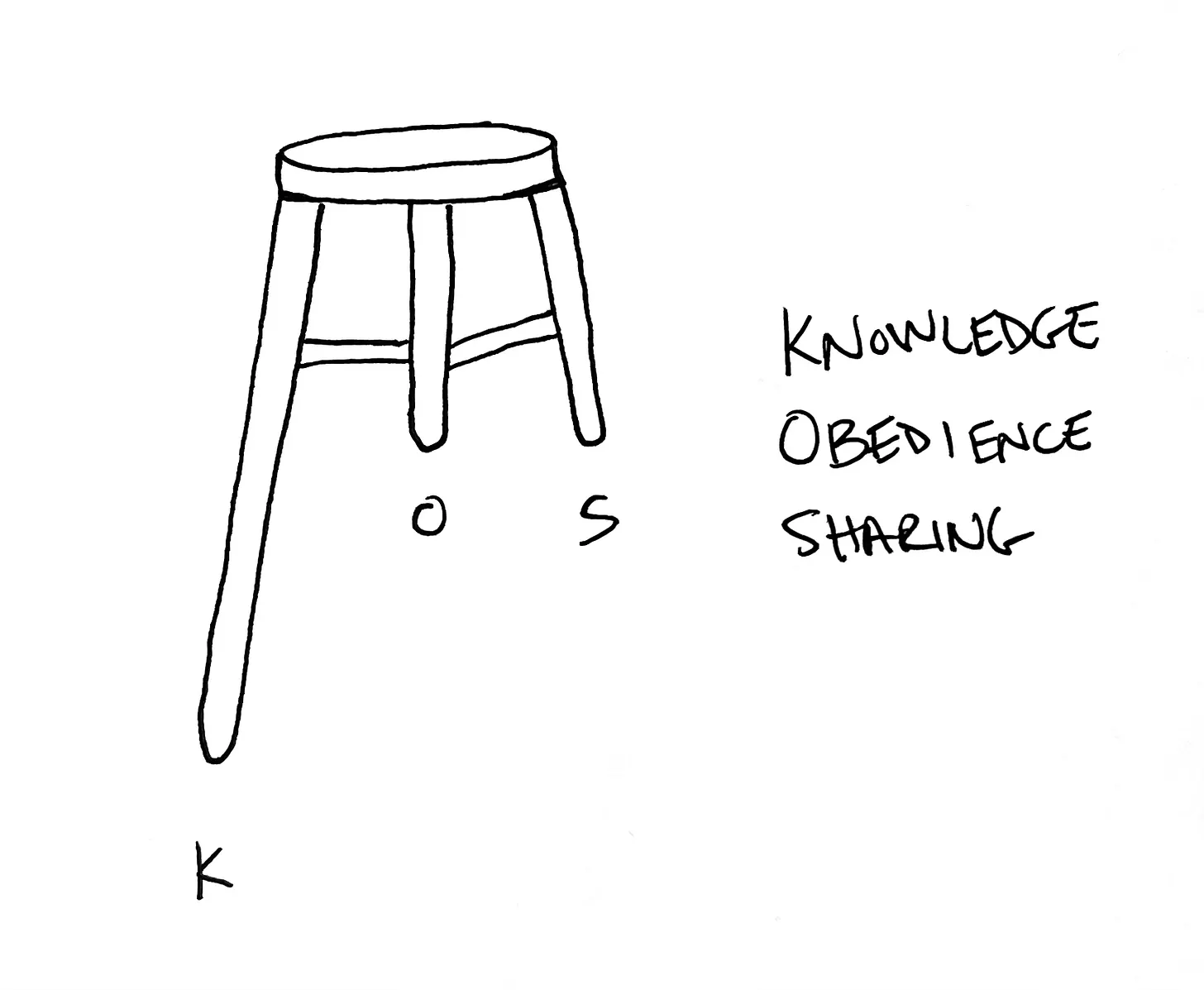
Ask most believers whether they should forgive, pray, be generous, or tell a friend about Jesus, and they’ll say yes. They’ve known for years. So the gap isn’t information. It’s the distance between knowing a thing and actually doing it, and that distance does not close by adding more content. Another podcast, another sermon series, another book: the knowledge leg grows longer, and the stool leans further.
You grow the short legs the way you grow any skill, with reps.
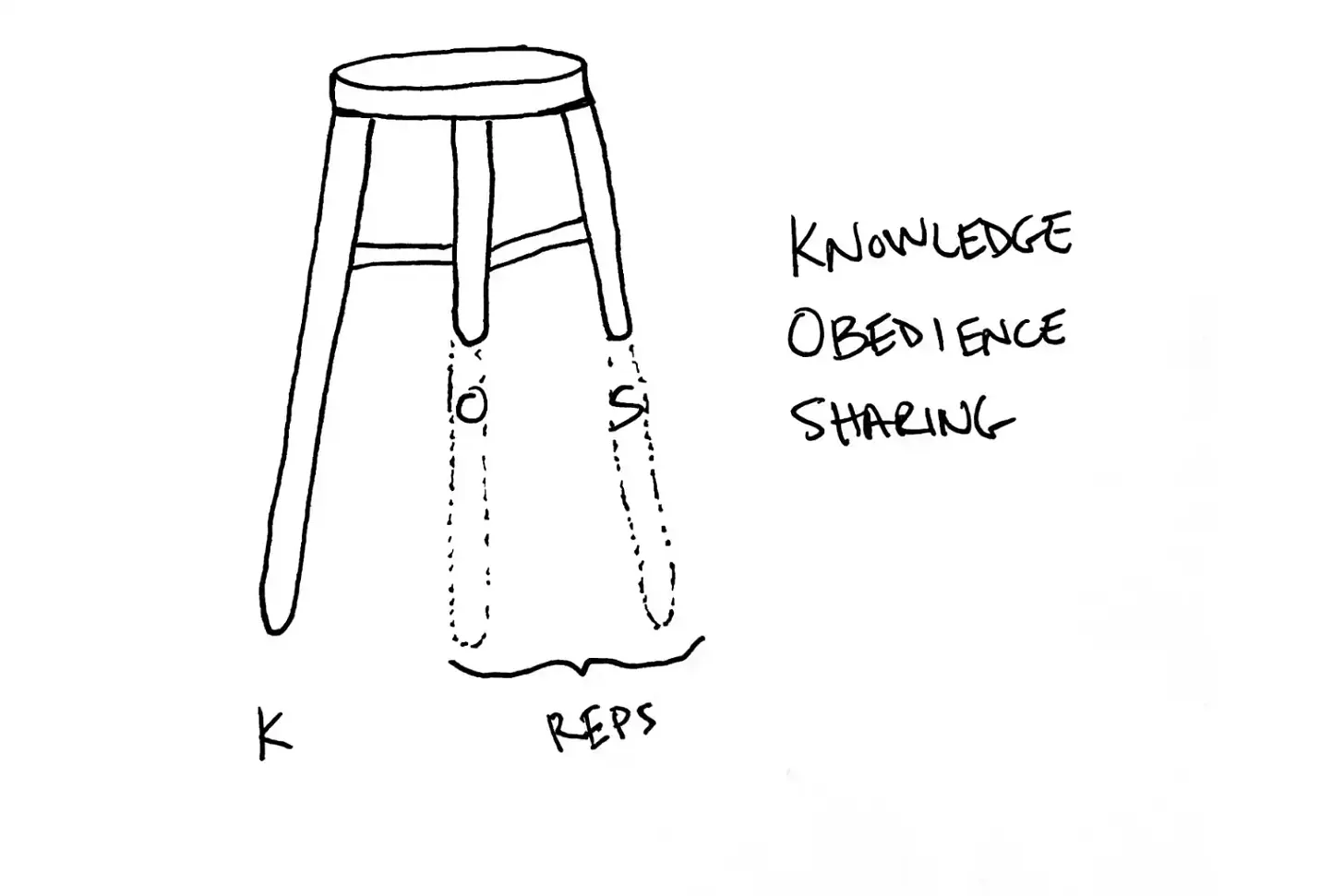
The first spiritual conversation you try may feel awkward. So may the first time you ask a coworker if you can pray for them. But practice matters. Information alone does not close the gap between knowing and doing. The Spirit changes us as we stay close to Jesus, obey what he says, and practice it in real life. Jesus sent his followers out to heal and announce the kingdom while they were still learning. Going was part of how they learned it (Luke 10:1-9, 17).
So the reps are simple, and you can start this week. Stay connected to Jesus daily in his Word and prayer, and do the one thing he shows you. Keep the names of people who don’t yet know him in front of you, and pray for them. Learn to point someone to Jesus in your own words. These are the three core habits of a disciple, and they’re simple enough for a brand-new follower. When you need help saying it, the 3 Circles gospel presentation lets you explain the good news on a napkin, and learning to share your testimony gives you something honest to say the first time someone asks what changed.
None of this makes you a disciple. Following Jesus does that. But this is what following looks like when it stops being an idea and starts being a Tuesday.
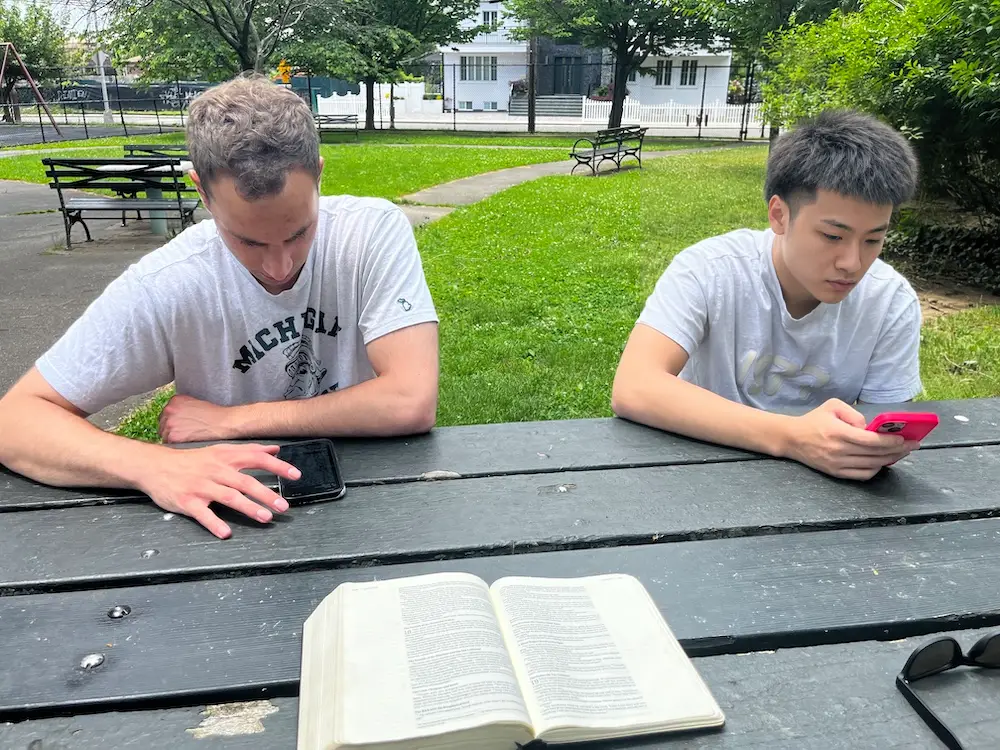
Two young men read a story of hope and set goals to obey it.
A Disciple Makes Disciples
There is one more mark, and it is the one most definitions leave out. Jesus never intended his disciples to be the end of the line. Matthew closes with Jesus commanding his disciples to make more disciples:
Matthew 28:19-20Therefore go and make disciples of all nations, baptizing them in the name of the Father and of the Son and of the Holy Spirit, and teaching them to obey everything I have commanded you.
A disciple who is being trained to be like Jesus will eventually do what Jesus did: help someone else follow him. That does not mean you wait until you are an expert. It means that from early on, following and helping-others-follow belong together, the same way they did the day Jesus first said “follow me, and I will send you out to fish for people.”
So if you’ve been wondering whether you count as a disciple because you feel like a beginner, here’s the honest answer: beginners are exactly who Jesus called. He built his whole plan out of fishermen and tax collectors who were still learning. The question to face is whether you’re following and learning to help someone else do the same.
Ready for the next step? Once you know what a disciple is, the obvious question is how you help someone become one. That is what how to make disciples is for: the simple, reproducible pattern Jesus gave, and how to begin it with a real person.
Your Next Step
- Name your teacher honestly. Ask yourself who is actually shaping how you live right now. If the honest answer is not Jesus, that is the thing to bring to him first.
- Take one following step this week. Read a short passage of Scripture, ask what Jesus wants you to obey in it, and do that one thing.
- Say it out loud. Tell one other person what you are trying to obey, and ask them to check in with you on it. Following was never meant to be private.
Frequently asked questions
What is a disciple in simple terms?
A disciple is a follower and learner who attaches their life to a teacher in order to become like them. A disciple of Jesus is someone who follows Jesus, is being changed to be like him, and is learning to help others do the same.
What is a disciple in the Bible?
In the Bible, “disciple” translates the Greek mathētēs, meaning a learner or apprentice. It is the most common word the Gospels and Acts use for Jesus’ followers. Jesus said his disciples are marked by following him (Luke 14:27), holding to his teaching (John 8:31), and loving one another (John 13:34-35).
Is every Christian a disciple?
Yes. The New Testament does not treat “believer” and “disciple” as two different tiers of Christian. When a person trusts Jesus, they have begun following him, which is what a disciple is. The word “disciple” simply describes the following that faith starts.
What is the difference between a disciple and an apostle?
A disciple is any follower and learner of Jesus. An apostle is a “sent one,” a specific role Jesus gave to particular people. Every apostle was first a disciple, but not every disciple is an apostle. See what “apostle” actually means for the fuller distinction.
What does it mean to be a disciple of Jesus today?
The same thing it meant for the first followers: to turn from your old direction and follow Jesus, to learn his teaching and obey it, to love other believers, and to help others follow him too. In practice that looks like abiding in him daily, praying for people who don’t yet know him, and being able to point someone to him simply.