
One-on-One Discipleship
You do not need a curriculum or a seminary degree. You need a person, a few simple tools, and a plan that reproduces.
One-on-one discipleship is simpler than it sounds. You start with one person and a couple of simple tools, help them begin reaching the people already around them, and as those people come to faith, you hand them the same tools to do it again. The whole plan is built to reproduce, so the person you disciple can disciple someone else without needing you in the room. Every tool in it is free.
Most people make discipleship harder than it is. They wait for a curriculum, a class, or a feeling of being qualified. You do not need any of that. You need one person, a few simple tools, and a plan you can hand off. Here is the plan.
The goal is someone who can do it without you
Before the steps, get the aim right. You are not trying to create a lifelong student who depends on you. You are trying to raise up someone who can turn around and do the same thing with someone else. Paul told Timothy to build that kind of reproducing chain on purpose:
2 Timothy 2:2And the things you have heard me say in the presence of many witnesses entrust to reliable people who will also be qualified to teach others.
Four generations are in that one verse: Paul, Timothy, reliable people, and the others they will teach. That is the whole point of the plan below. Every tool in it is simple enough to pass on.
The plan at a glance
- Start the person on the Conversation Box and the 4-1-1 tool.
- Gather the lost and seeking people in their oikos and go through the 7 Stories of Hope with them.
- Multiply as those people come to faith: take them through the commands of Christ with the Church Waffle, and have each of them do the same with their own oikos.
Move 1: the Conversation Box and 4-1-1
Start the person you are discipling with two tools right away.
The Conversation Box teaches them how to take a normal conversation and move it, one honest step at a time, from casual to meaningful to spiritual to discovery. It takes the mystery out of “how do I even bring up Jesus.”
The Conversation Box
- CasualFood & fun
- MeaningfulFamily & festivals
- SpiritualFaith & future
- DiscoveryLooking at Jesus together
The 4-1-1 tool walks them through four getting-started questions drawn from the Great Commission in Matthew 28:18-20: why, who, how, and when. Along the way they settle who they are in Christ, map the people in their life, learn to tell their story simply, and set a first goal. It is plain enough that the person you are discipling can turn around and use it with someone else next month. That is the test of every tool here: could they use it themselves?
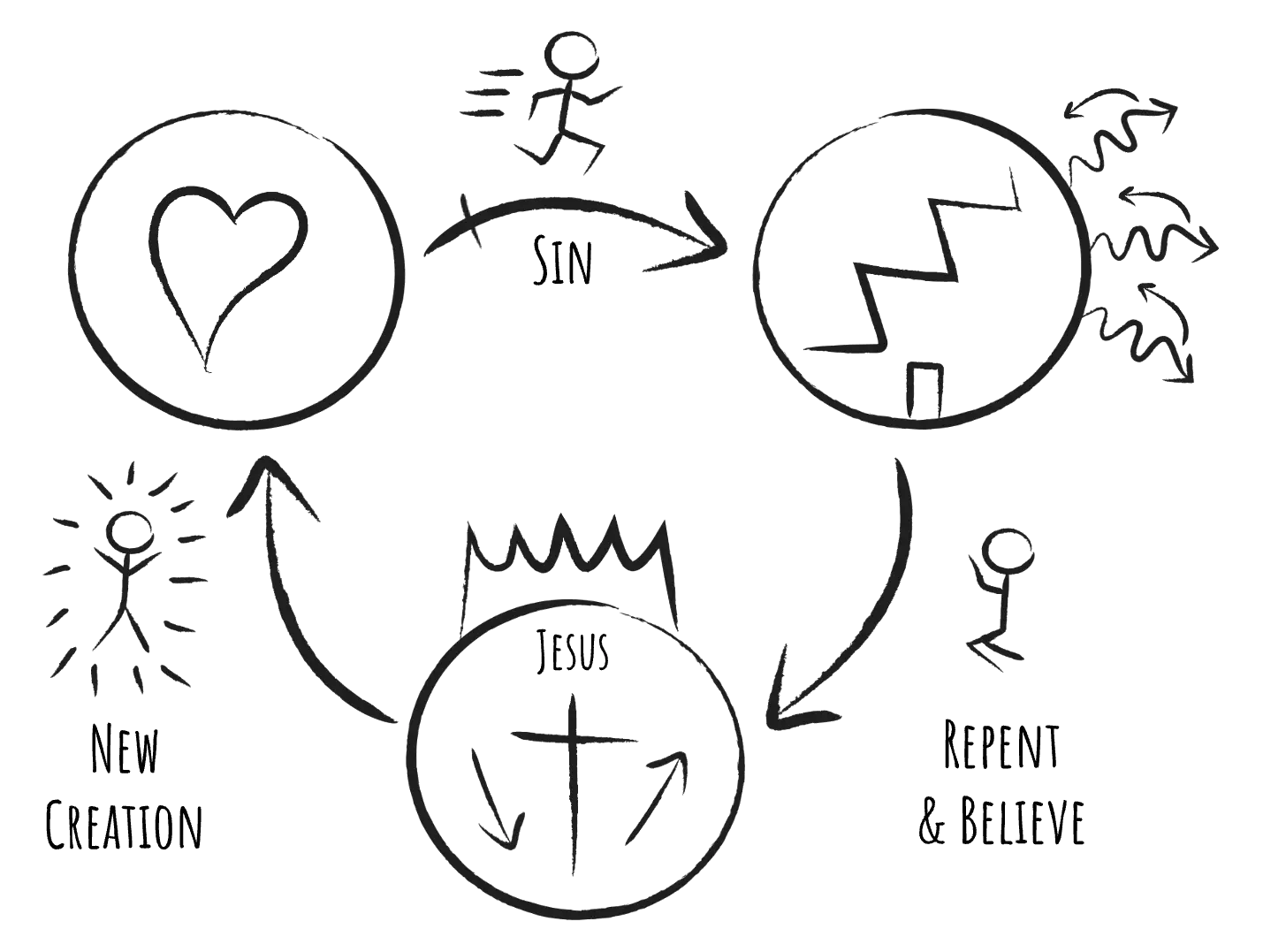
Move 2: gather their oikos and open the Stories of Hope
Next, help the person look at the people already around them. Their oikos is their household and the web of relationships they already have: family, friends, coworkers, neighbors. The gospel has always traveled fastest along those lines of trust, so you do not send them to strangers. You send them home.
Have them gather a few of the lost or seeking people in that oikos and open the 7 Stories of Hope with them. It is a set of short Bible stories you read and talk through together, letting people meet Jesus in the text and move toward faith at their own pace. This is discovery, not a lecture, and it is something the person you disciple can lead from day one.

Move 3: the Commands of Christ and the Church Waffle
As people in that oikos come to faith, the work shifts from discovery to obedience. You take the new believers through the commands of Christ, the things Jesus actually told his followers to obey, using the Church Waffle as the simple picture of what a healthy church family does together, drawn from Acts 2:36-47. Their first month of following Jesus has its own shape, which new believer follow-up walks through.
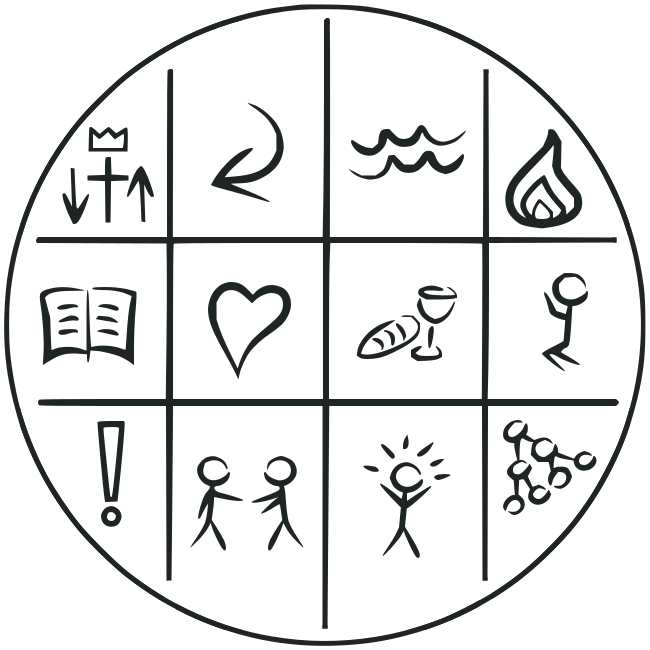
And here is the move that makes it multiply: you have each new believer do the same thing you just did, starting with their own oikos. They learn the Conversation Box and 4-1-1, they gather their lost and seeking people, they open the Stories of Hope, and the cycle begins again one relationship over.
TAKE THE NEXT STEP
You can read every book on discipleship and still never disciple one person, because a disciple is made with a name, not a notebook.
A lab is where this plan stops being a diagram and becomes something you have actually practiced with other people.
Loading the next lab…
Then it reproduces
Notice what you have built. You did not create one well-taught Christian. You started a pattern that can run without you. The person you discipled can now disciple someone else with the exact same simple tools, and that person can do it again. That is the difference between adding one disciple and making disciples who make disciples.
All of the tools in this plan are free, and most of them live at obey.tools, so the person you are discipling can pull them up on a phone and use them the same week.
Practice This Week
Write down one name: a person you could disciple, or a lost or seeking person you could open the Stories of Hope with. Pray for them this week, and take the first small step, a conversation, an invitation, or the first story. You do not need the whole plan in place to begin. You need one name and one step.
Frequently asked questions
How do I disciple someone one-on-one?
Give them a few simple tools and walk with them as they use them. Start with the Conversation Box and the 4-1-1 tool, help them gather the lost and seeking people in their oikos and go through the 7 Stories of Hope, and as those people come to faith, take them through the commands of Christ with the Church Waffle. The key is that every tool is simple enough for them to use with someone else, so you are always training a trainer, not just teaching a student.
What do I do first?
Start with the person and the first tool, not a whole program. Get them into the Conversation Box and 4-1-1, and help them name the lost and seeking people already in their life. You do not need the entire plan mapped out before you begin. You need one person, one tool, and one next step, and the rest unfolds as they go.
How does one-on-one discipleship multiply?
By handing off, not holding on. Instead of keeping the person dependent on you, you have them do with their own oikos exactly what you did with them: the same conversations, the same Stories of Hope, the same commands of Christ. Because the tools are simple and reproducible, each person you disciple can start the cycle again, which is how one relationship becomes many.
Where to go next
This plan is the practical shape of how to make disciples. If you have not mapped your own oikos yet, start with the 3 core habits of a disciple, then pick one person, open the 7 Stories of Hope, and begin.