
How to Train Disciples
Disciple training is helping the people you disciple gain the skills, character, and confidence to make disciples of their own, and to train others to do the same. It is the step between making a disciple and multiplying. You train the way Jesus did: show them, do it alongside them, watch them try it, then hand them the work and help them train someone else.
Plenty of us disciple a person or two. Far fewer train those disciples to make disciples, and that is exactly where multiplication stalls. This is about closing that gap: how to turn the people you are discipling into disciple-makers who can do it without you.
What Disciple Training Is
Training is not a class you put someone through. It is helping a real person become able to do something they could not do before, and then reproduce it. In disciple-making, that means they can share the gospel, help a new believer obey Jesus, gather a simple group, and eventually train the next person while you step back.
That makes training different from making a disciple, though the two overlap and usually happen together. Making disciples is helping someone follow Jesus. Training disciples is equipping those followers to make and multiply disciples themselves. Jesus did both at once: he called the Twelve to follow him, and from the first day he was preparing them to do what he did.
He said the goal out loud:
Luke 6:40The student is not above the teacher, but everyone who is fully trained will be like their teacher.
The point of training is not information in someone’s head. It is a person who can do what their trainer does, and pass it on.
Why Training Is the Missing Step
You can pour yourself into people for years and still leave nothing behind that reproduces, because you did the ministry for them instead of training them to do it. The work grew while you were there and stopped when you left.
Paul refused to let it stop with him:
2 Timothy 2:2And the things you have heard me say in the presence of many witnesses entrust to reliable people who will also be qualified to teach others.
Count the generations in that one verse: Paul, to Timothy, to reliable people, to others. Four generations, built into the plan from the start. Addition is what happens when you only ever disciple people yourself. Multiplication is what happens when you train those people to disciple others. The thing that moves you from one to the other is training.
This is also why content is not the same as a system. Good teaching fills people with information. A simple system trains them to reproduce. You need both, but the reproducible part is what most training quietly leaves out.
Train the Way Jesus Did: Model, Assist, Watch, Leave
Jesus appointed the Twelve for two purposes at once: that they might be with him, and that he might send them out (Mark 3:14). He let them watch him work, then sent them to do the same and come back to talk it through. That pattern is easy to remember as four moves, often called MAWL:
Model, Assist, Watch, Leave
Model. Do it while they watch. Share the gospel, lead the group, follow up on last week’s obedience, with them beside you seeing how it is done.
Assist. Do it together. They take a piece of it while you are right there to help and encourage.
Watch. Let them do it while you watch, then give honest, kind feedback afterward.
Leave. Hand them the work, and help them begin training someone else the same way.
MAWL is not a command Jesus gave by name. It is a way of describing how he actually trained, and it works because people learn to do by doing, not by being told. The most common mistake is getting stuck on Model: teaching and demonstrating forever, and never letting people try, fail, and grow. You cannot steer a parked car. At some point you have to let them drive. If you want the deeper walkthrough of each phase, MAWL: model, assist, watch, leave takes it one letter at a time.
Keep It Simple Enough to Pass On
Here is the test for everything you train someone in: could they turn around and do it with someone else next week, without you in the room? If it takes your knowledge, your gifting, or a projector to pull off, it will stop with you.
So give people enough to obey and pass on, not everything you know. Train them in a few simple, reproducible tools instead of a thick curriculum: a short way to share the gospel, a plain way to read and obey Scripture together like the Three Thirds process, and a straightforward list of what Jesus actually commanded. One reliable way to see and reproduce the whole pattern is Four Fields training, which stays simple enough for a new believer to grasp and hand on within weeks. If you want a ready-made set of those starter tools laid out in order, the discipleship training curriculum walks through them one at a time.
Where Training Breaks Down
Over-training. You keep adding content and never release people to practice, so they stay dependent on you.
Complexity. You train people in something so involved that no one they disciple could ever reproduce it.
No follow-up. You run one workshop and walk away, so nothing changes, because training without ongoing practice fades fast.
TAKE THE NEXT STEP
You can disciple people for years and still leave nothing behind that reproduces, because you did the ministry instead of training them to do it.
A lab is where training stops being a plan you agree with and becomes a skill you can pass on, practiced and coached alongside other people before you train someone yourself.
Loading the next lab…
Train the Whole Person, Not Just the Skill
Skills reproduce, but so does character, and Paul was careful who he handed the work to. He entrusted it to “reliable people” (2 Timothy 2:2). Watch for the faithful, available, teachable, and reproducing, and invest your deepest time there. That is not writing anyone off. It is stewarding your limited time where God is already giving fruit.
Character grows the same way a skill does, through honest relationship over time. Build in friendly accountability so the people you train are formed and not only informed. Ask about their walk with Jesus, their obedience, and their own disciple-making, not only their technique.
Training Keeps Going After the Workshop
Most people get trained and never start. A weekend of good teaching feels like progress, but training that stops at information rarely changes what anyone does on Monday. Real training looks more like coaching: you keep walking with people as they try, stumble, and adjust in actual ministry.
So plan for the long game. Meet regularly, help people process what worked and what didn’t, celebrate small steps of obedience, and send them back out to try again. The best way to grow at this is to get trained and coached in it yourself, alongside other people who are learning to do the same, rather than trying to figure it all out alone.
Where Training Leads
When you train disciples who train disciples, two things start to grow: people and churches. The disciples you train will gather the people they reach, and those gatherings become church. That is the natural next step, and it helps to understand what a simple church actually is before you are standing in one.
Training is not measured by what you can do with people watching. It is measured by what they can do once you are gone, and whether they can train the next person too.
You do not become a trainer by finishing an article about training. You become one by taking a person through something you already know how to do.
Your Next Step
- Pick one person you are already discipling, or one you could start with.
- Pick one thing to train them in this month: sharing the gospel, leading a simple Bible discussion, or following up with a new believer.
- Model it once while they watch, then do it together the next time.
- Ask the multiplying question: who are they going to train in this next?
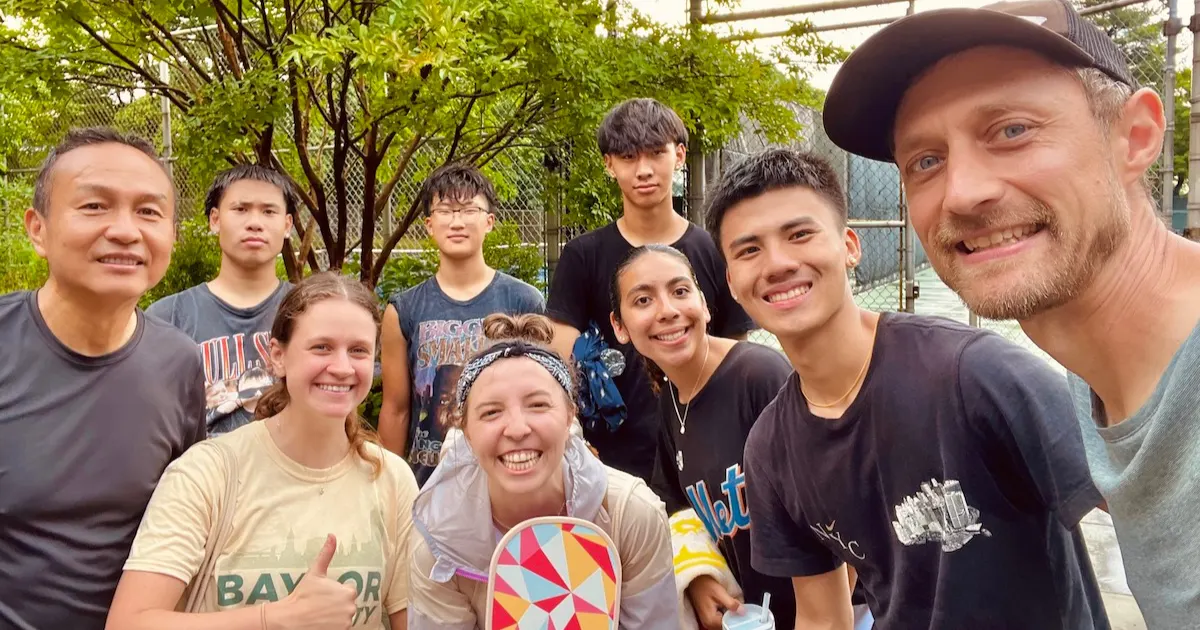
Listen to what changed when a group of young disciples joined a real ministry trip, and why training sticks when people see the life behind the lesson.
Frequently asked questions
What is disciple training?
Disciple training is equipping the people you disciple to make disciples themselves, and to train others to do the same. It goes beyond passing on information. It builds the skills, character, and confidence to actually do the work of disciple-making and reproduce it, the way Jesus trained the Twelve to do what he did (Luke 6:40).
What is the difference between making disciples and training disciples?
Making disciples is helping someone follow Jesus. Training disciples is equipping those followers to make and multiply disciples of their own. The two overlap and often happen together, but training is the step that turns a disciple into a disciple-maker, and that is where multiplication comes from (2 Timothy 2:2).
What is MAWL (Model, Assist, Watch, Leave)?
MAWL is a simple way to describe how Jesus trained his disciples: Model it while they watch, Assist them as they try, Watch them do it and give feedback, then Leave the work in their hands as they train the next person. It is not a command in the Bible, but it captures the move from doing ministry for people to releasing them to do it themselves.
Do I need to be an expert to train someone?
No. You need to be able to do the thing you are training, and be willing to let someone learn it by doing it alongside you. Jesus trained fishermen and tax collectors. If you can share the gospel simply and help someone obey Jesus, you have enough to begin training another person to do the same.
Where can I get disciple-making training?
Start by training one person in something you already know how to do. Beyond that, the most useful training is hands-on and coached: find a setting where you can practice making disciples with other people and get honest feedback, instead of only sitting through a workshop. Learning to train disciples happens best in real practice alongside others, not in theory alone.