
A Simple Discipleship Training Curriculum
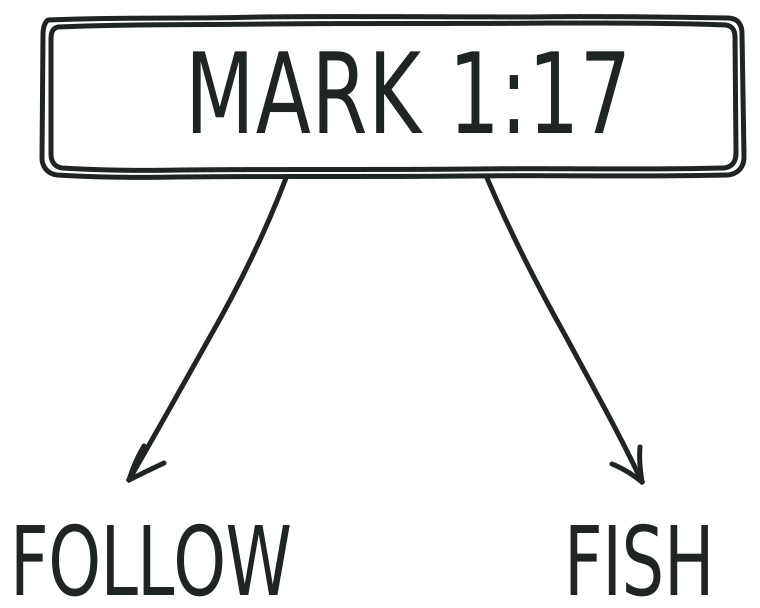
A discipleship training curriculum does not need to be long or complicated. This one is a short sequence of simple, high-directive starter tools that equip a new disciple to do the two things Jesus called us to: follow him and fish for people (Mark 1:17). You introduce the tools one at a time, in order, as the disciple is ready, until following and fishing become normal life. All of the tools are free at obey.tools. This is not the only way to get a disciple started, but it is a field-tested way that reproduces.
That is the whole thing, and its simplicity is the point. Most discipleship curricula are too heavy to hand off. They need a teacher, a binder, and months of classes, so the disciple ends up depending on the material and the expert instead of on Jesus. This one is light enough that a brand-new believer can use it and turn around and use it with someone else.
Start With Follow and Fish
Everything in this curriculum serves one aim, the one Jesus gave his first disciples:
Mark 1:17“Come, follow me,” Jesus said, “and I will send you out to fish for people.”
Follow and fish. That is what a disciple does, from the very beginning. Not follow for a few years and fish once you are qualified, but both, together, from day one. So the tools below are not information to learn. Each one helps a new disciple actually do one part of following Jesus and helping others follow him too, until it becomes second nature.
Keep It Simple, Reproducible, and High-Directive
Three things make this work.
It is simple, so it does not overwhelm a new believer or require a professional to run.
It is reproducible, meaning every tool is easy enough that the person you disciple can use it with the next person without needing you in the room.
And early on it is high-directive. When someone is brand new, you do not hand them a blank page and ask them to figure out discipleship. You give them a clear next step: here is the tool, here is how to use it, let’s do it. Directive does not mean controlling. It means kind and clear, the way you would teach anyone a skill they have never done before.
This is light enough that a brand-new believer can use it and turn around and use it with someone else. That is the whole test of a curriculum.
The Curriculum: Five Starter Tools, in Order
You introduce these one at a time, as the disciple is ready, not all at once. All of them are free at obey.tools.
-
The 4-1-1. Start here. The 4-1-1 sets a new disciple up with the basics: why they go (their identity as a follower who fishes), who is in their life to reach, how to tell their story and share the good news, and when they will actually do it. It gives the whole of following and fishing a simple shape on day one.
-
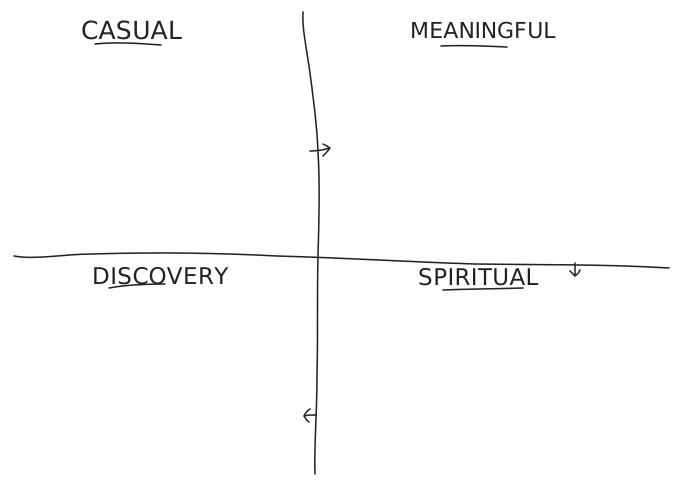
The Conversation Box. Next, help them steward the relationships God has already given them. The Conversation Box lets them track the people in their life and move each relationship one honest step at a time, from casual to meaningful to spiritual to discovery. It takes the mystery out of “how do I even bring up Jesus.”
-
The 7 Stories of Hope. Now give them something to actually do with their lost friends and family. The Stories of Hope are a simple set of Bible stories a new disciple can open with the people in their life, so those people begin getting into the Bible themselves and learning to follow Jesus, not just hearing about him secondhand.
-
The Commands of Christ. As people begin to believe, the Commands of Christ help a disciple learn the basics of what it actually means to follow Jesus, and to start practicing them. This is where obedience becomes a way of life, and where those simple obediences begin to become the DNA of a church.
-
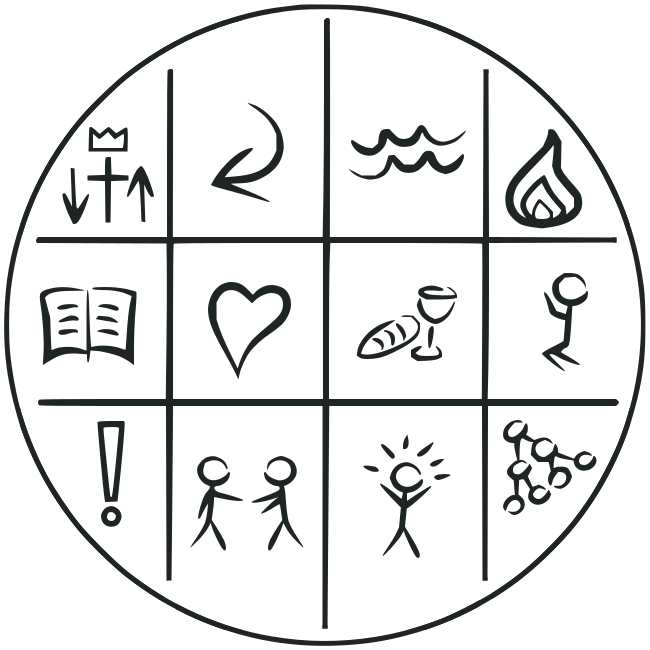
The Church Waffle. Finally, the Church Waffle, or Church Circle, helps a group understand what it means to function as the church. It shows them the simple practices a healthy church family does together, so they can see what it looks like to become the church, not just attend one.
The path in one line
4-1-1 to get started, the Conversation Box to steward relationships, the Stories of Hope to open the Bible with lost friends, the Commands of Christ to learn to obey, and the Church Waffle to become the church. Simple, in order, one at a time.
TAKE THE NEXT STEP
A curriculum you never run with a real person disciples no one.
A lab is where you learn to use these tools with people, one at a time, alongside others doing the same. Come practice before you lead.
Loading the next lab…
Then: Tools for Leadership
Once a disciple is following, fishing, and helping a new group become church, they are ready for more. From here you introduce tools for leadership development, so they can train others the way you trained them. That is the whole arc of how to train disciples: you model, they assist, they lead while you watch, and then you leave them to do it with someone new. The starter tools above are simply the first, most reproducible part of that longer journey.
How to Use It
The mistake to avoid is turning this into a class. Do not sit someone down and lecture through all five tools in a weekend. Introduce one, use it together with a real person, and only move to the next tool when the last one is being obeyed. Add tools at the speed of obedience, not the speed of information.
If you want to see the whole thing walked out with one person, one-on-one discipleship shows how these same tools fit together in a single relationship, and how to make disciples is the bigger picture they serve.
Tools serve obedience, not the other way around
None of these tools is the point, and none of them guarantees anything. They are simple scaffolding to help an ordinary person obey Jesus and help someone else do the same. Do not let the curriculum become a box to check or a body of information to master. If a disciple is following Jesus and helping one other person follow him, the curriculum is working, even if you never finish all five tools. If they can recite all five and are obeying none, it is not.
Start This Week
- Pick one person. Someone new in the faith, or someone you are helping get started.
- Introduce the 4-1-1. Sit down together, walk through it once, and help them name their people and their next step.
- Plan the next tool. Agree on when you will meet again, and let how they obey this first step tell you when to introduce the Conversation Box.
Frequently asked questions
What is a discipleship training curriculum?
It is a planned path for helping a new believer grow into a disciple who makes disciples. This one is deliberately simple: a short sequence of five starter tools (the 4-1-1, the Conversation Box, the 7 Stories of Hope, the Commands of Christ, and the Church Waffle) that equip a disciple to follow Jesus and fish for people, introduced one at a time as they are ready.
Is this discipleship curriculum free?
Yes. All of the tools are free at obey.tools, and they are designed to be reproducible, so you never need to buy a program or license anything to use them or pass them on.
Where do I get the tools?
The core tools live at obey.tools, and several are also explained here on the site: the Commands of Christ, the 7 Stories of Hope, and the Church Waffle. Start a disciple with the 4-1-1 and add the others in order.
How long does this curriculum take?
There is no fixed timeline, because you move at the speed of obedience, not a schedule. Some tools click in a single sitting; others take weeks of real practice. The goal is not to finish the material by a date, it is for following and fishing to become the disciple’s normal life and to keep reproducing in the people they reach.